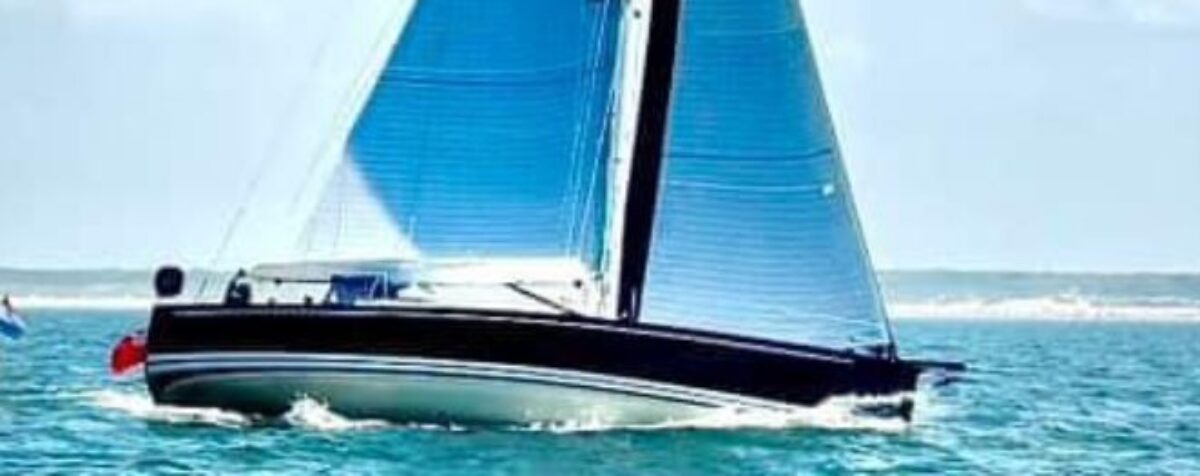
Belle Ile to Ile d’Yeu 55nm
Saturday 25 July
We set off South East on another sunny morning heading for the Ile d’Yeu.
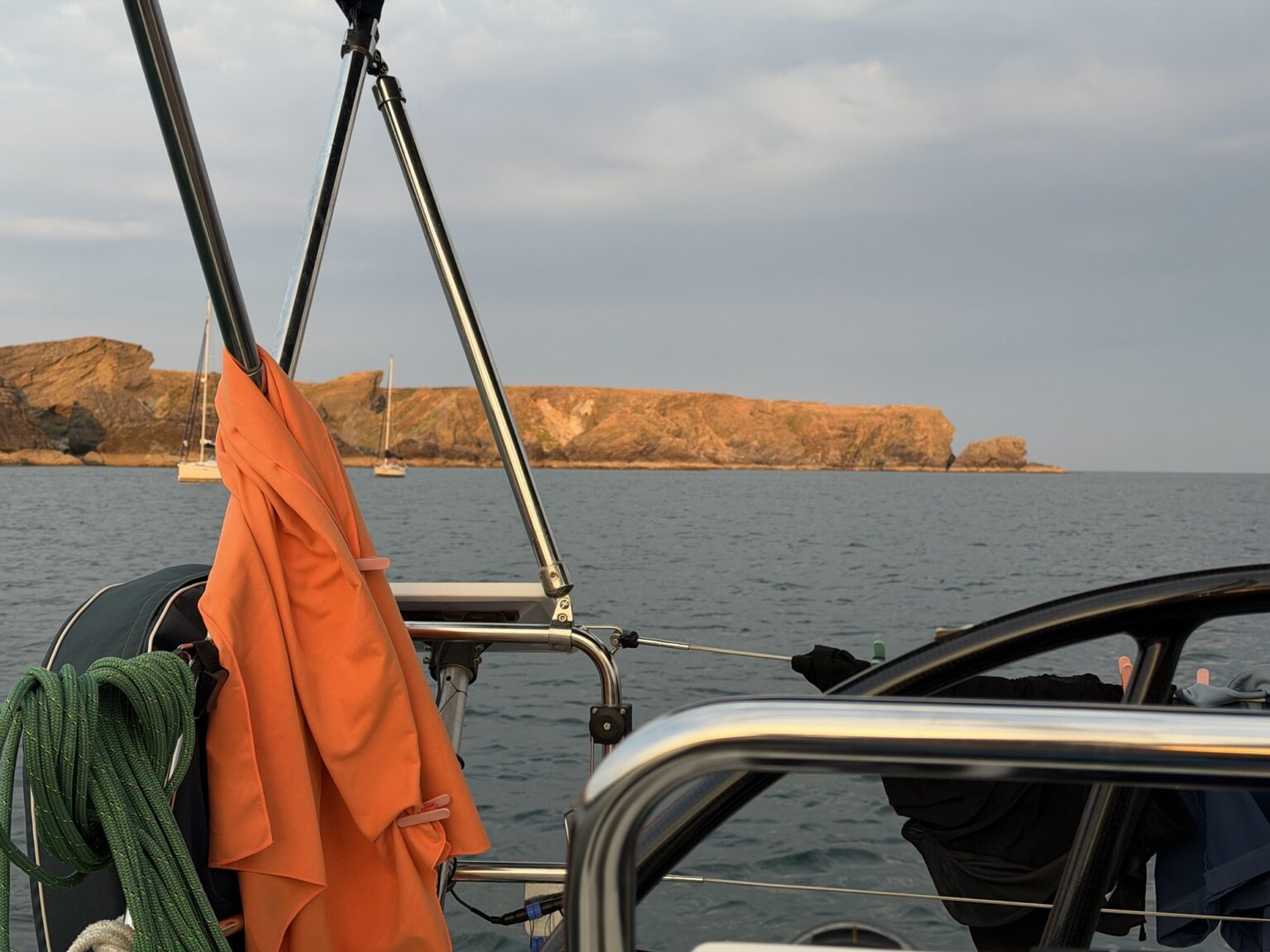
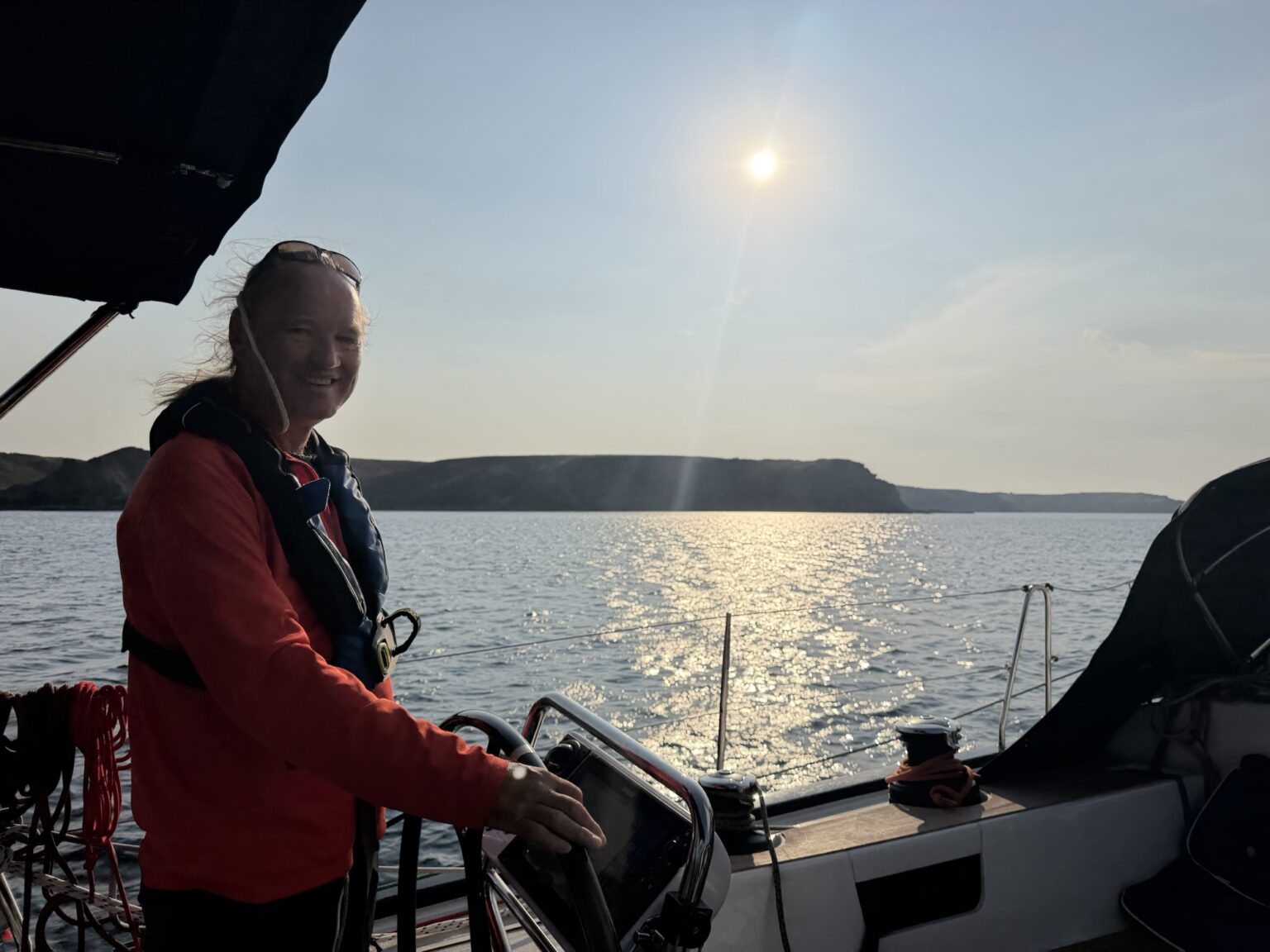
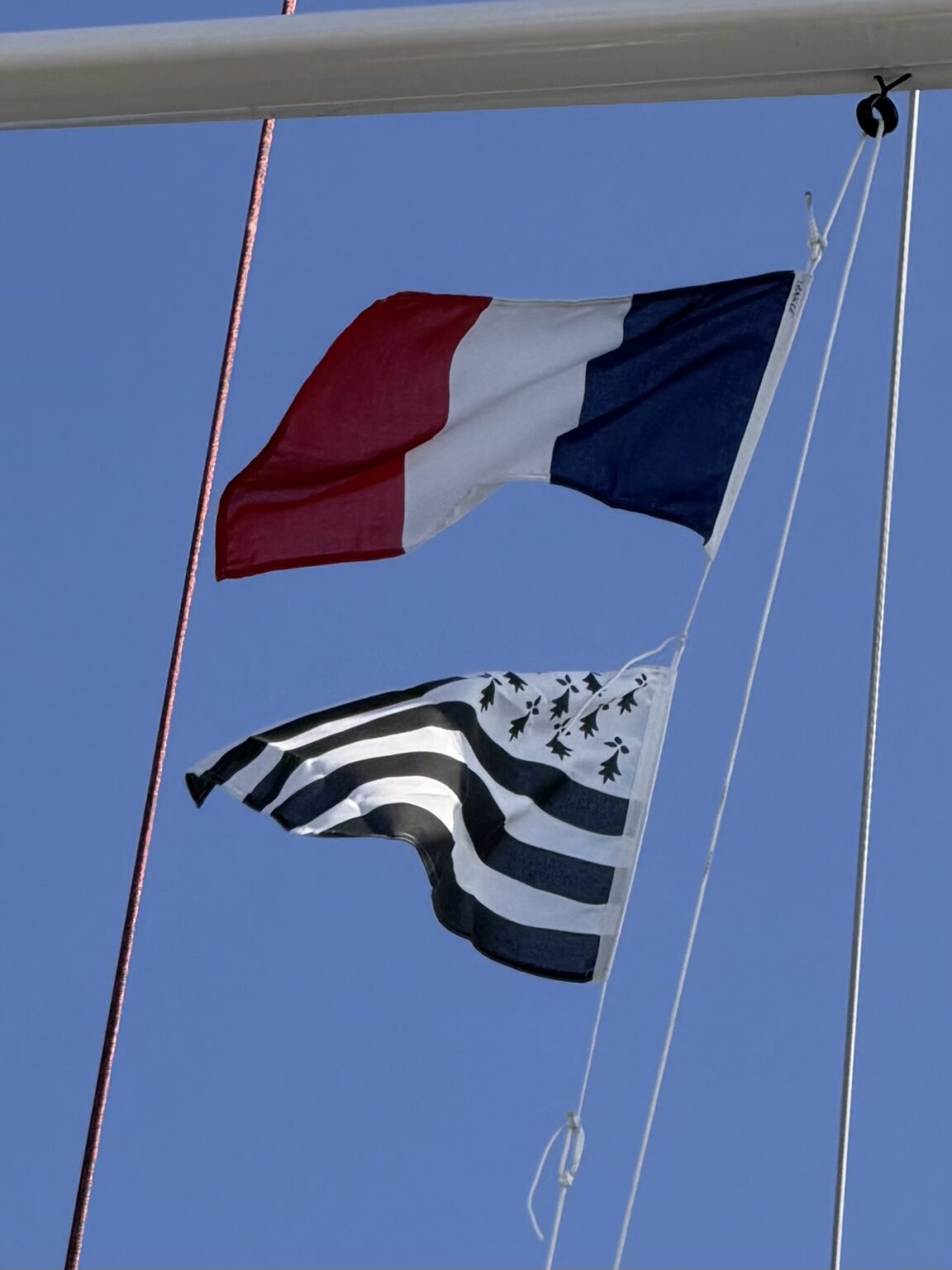
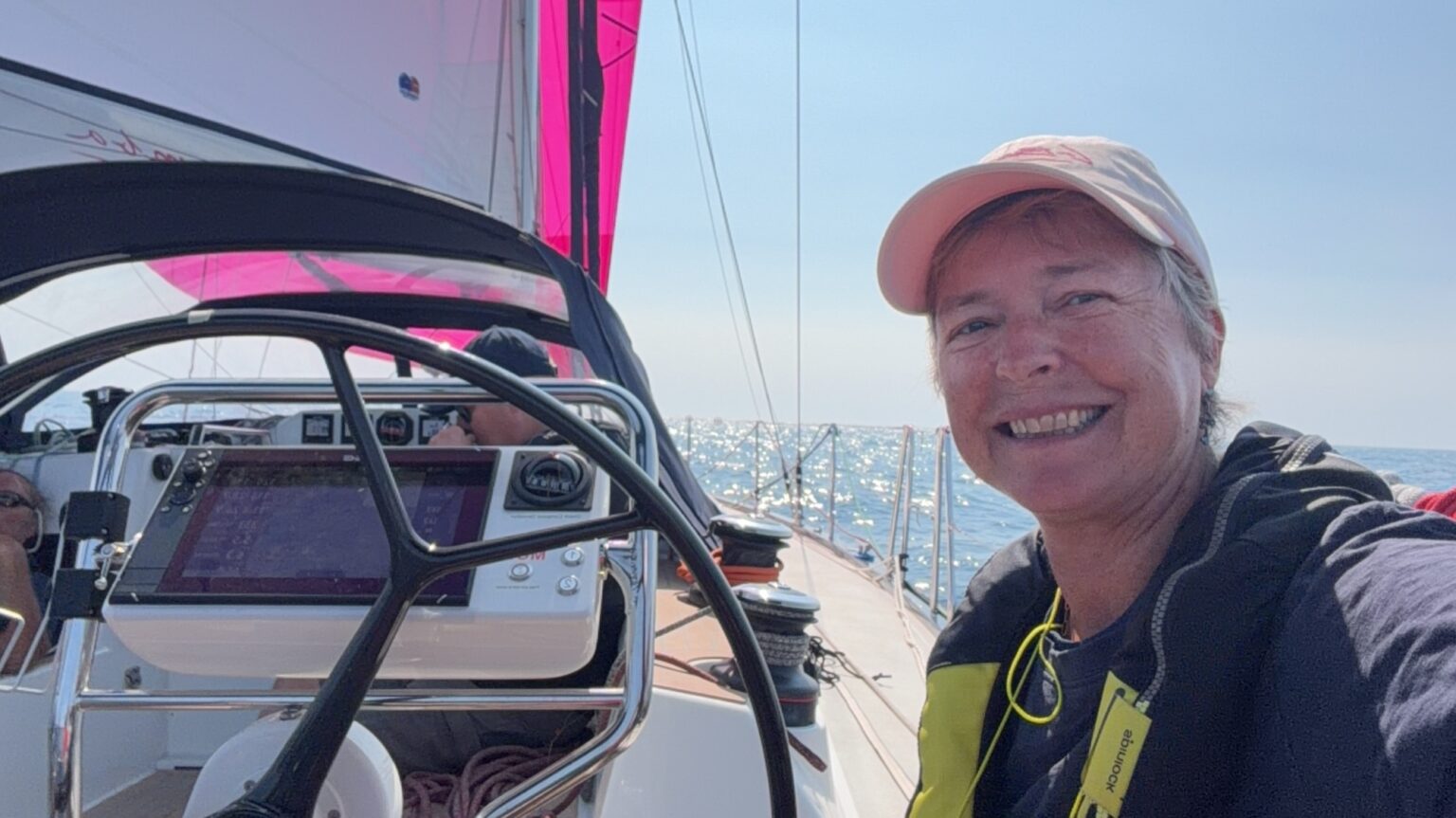
The winds were a constant 12-15 and we soon had Lily flying nicely. We took down our Brittany courtesy flag as the next area is the Vendée – we don’t have a Vendée flag.
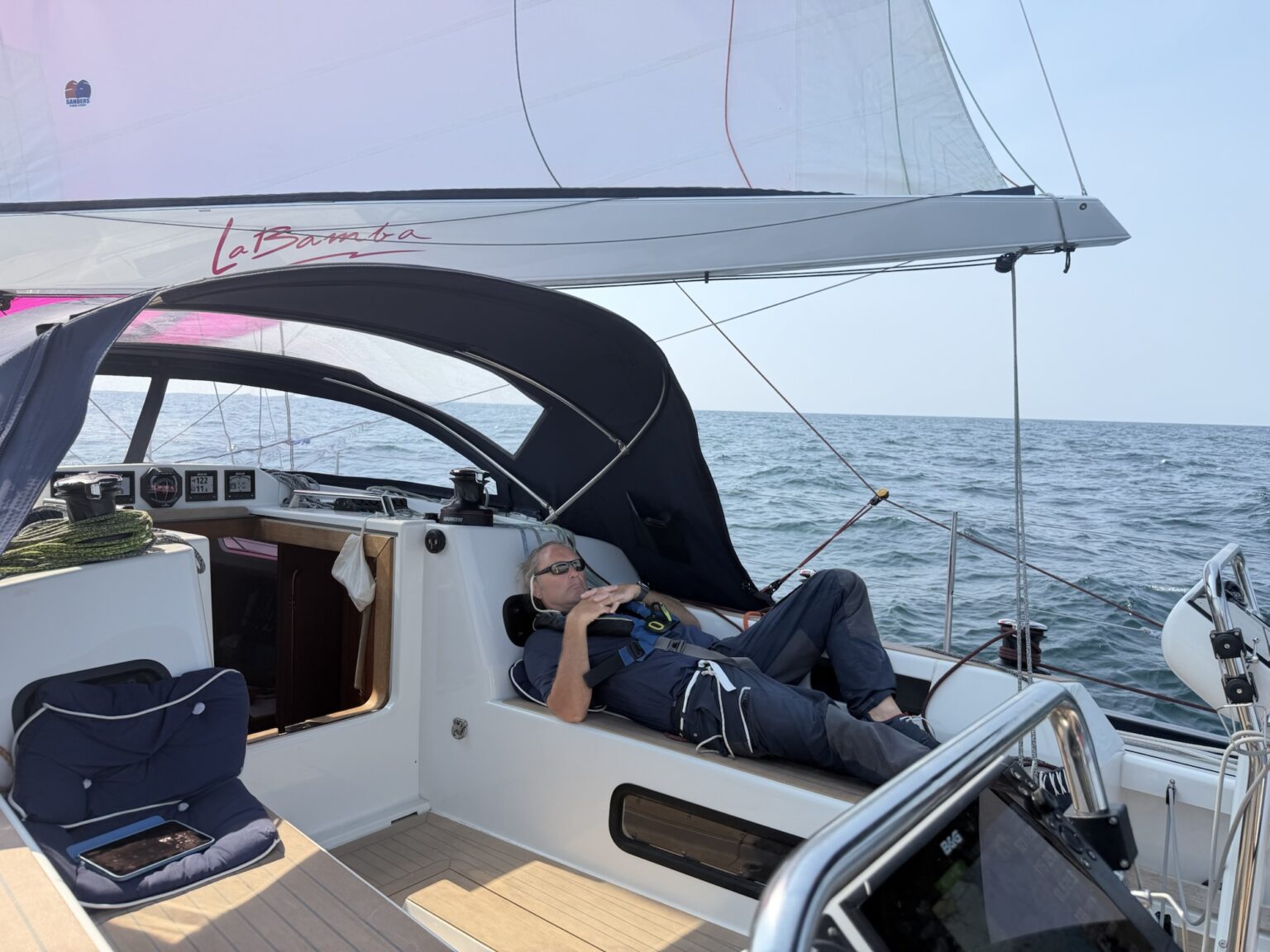
The sea lost her flatness and rolling waves came in as the wind freshened so we put in a reef.
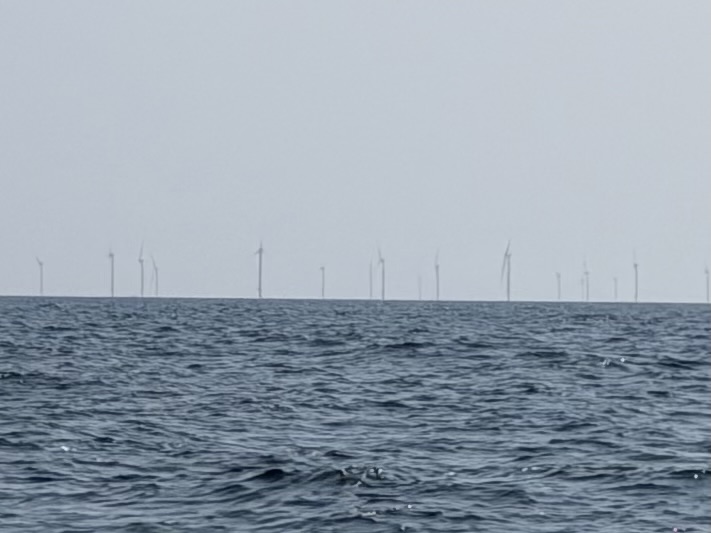
We found a wind farm that wasn’t on the chart, so we went round it.
As we got closer to Ile d’Yeu we were getting gusts of 17 to 19 knts and decided it was time to furl Lily in as the boat was getting a bit unstable.
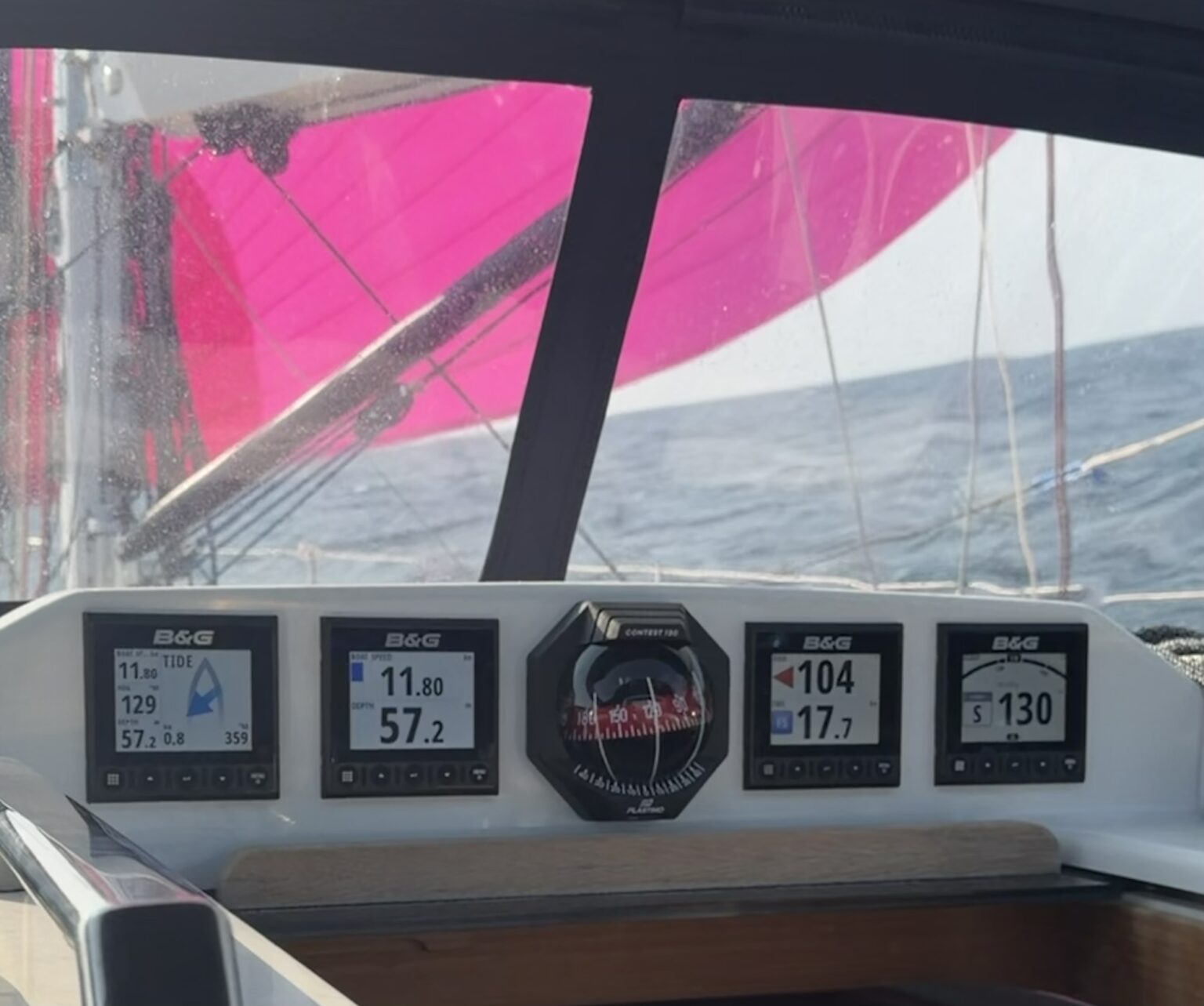
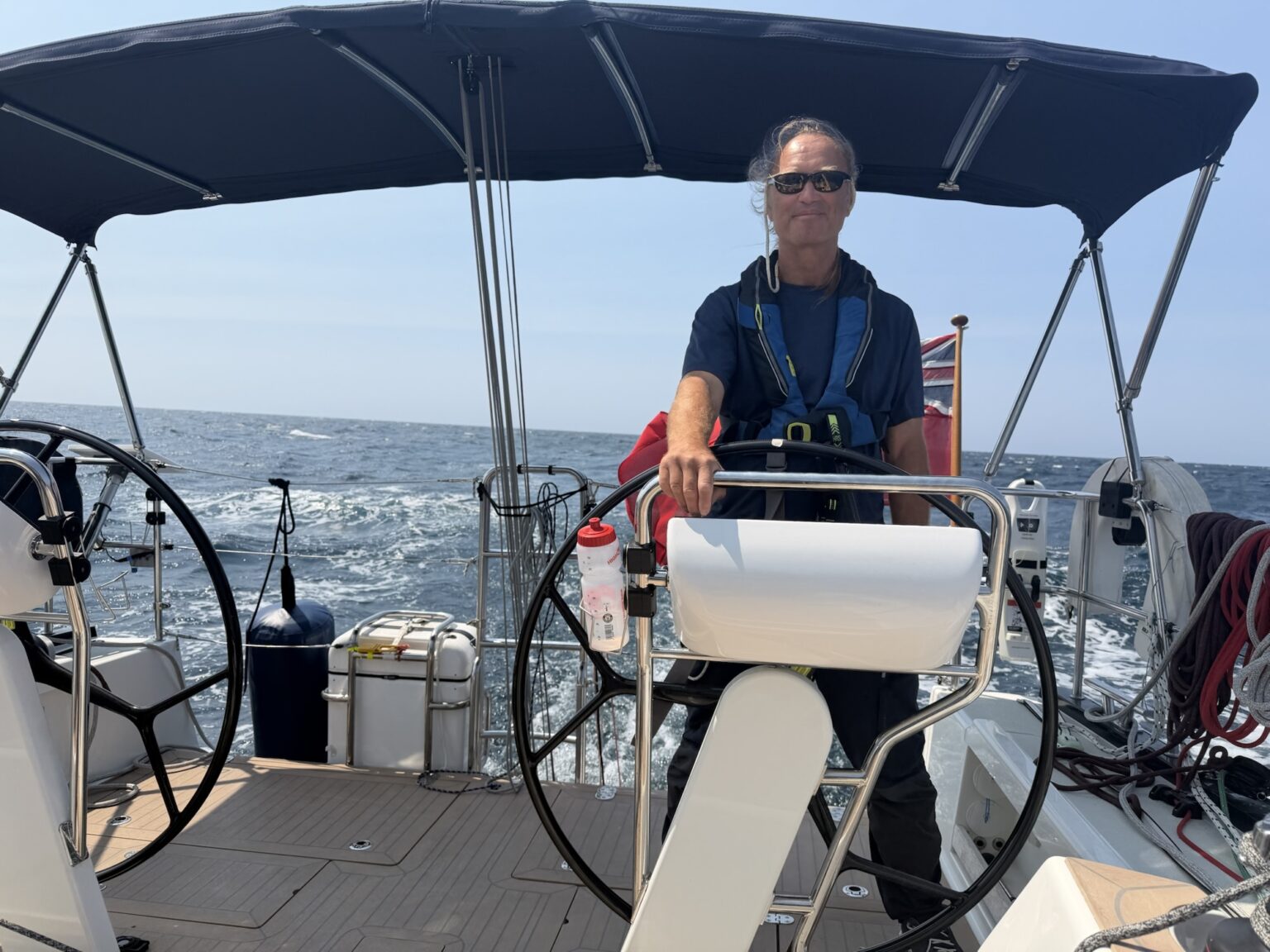
After she was down the wind built again to 20 knots and over so we were glad to be with our Yankee and reefed main. This is the most wind and waves we have had so far.
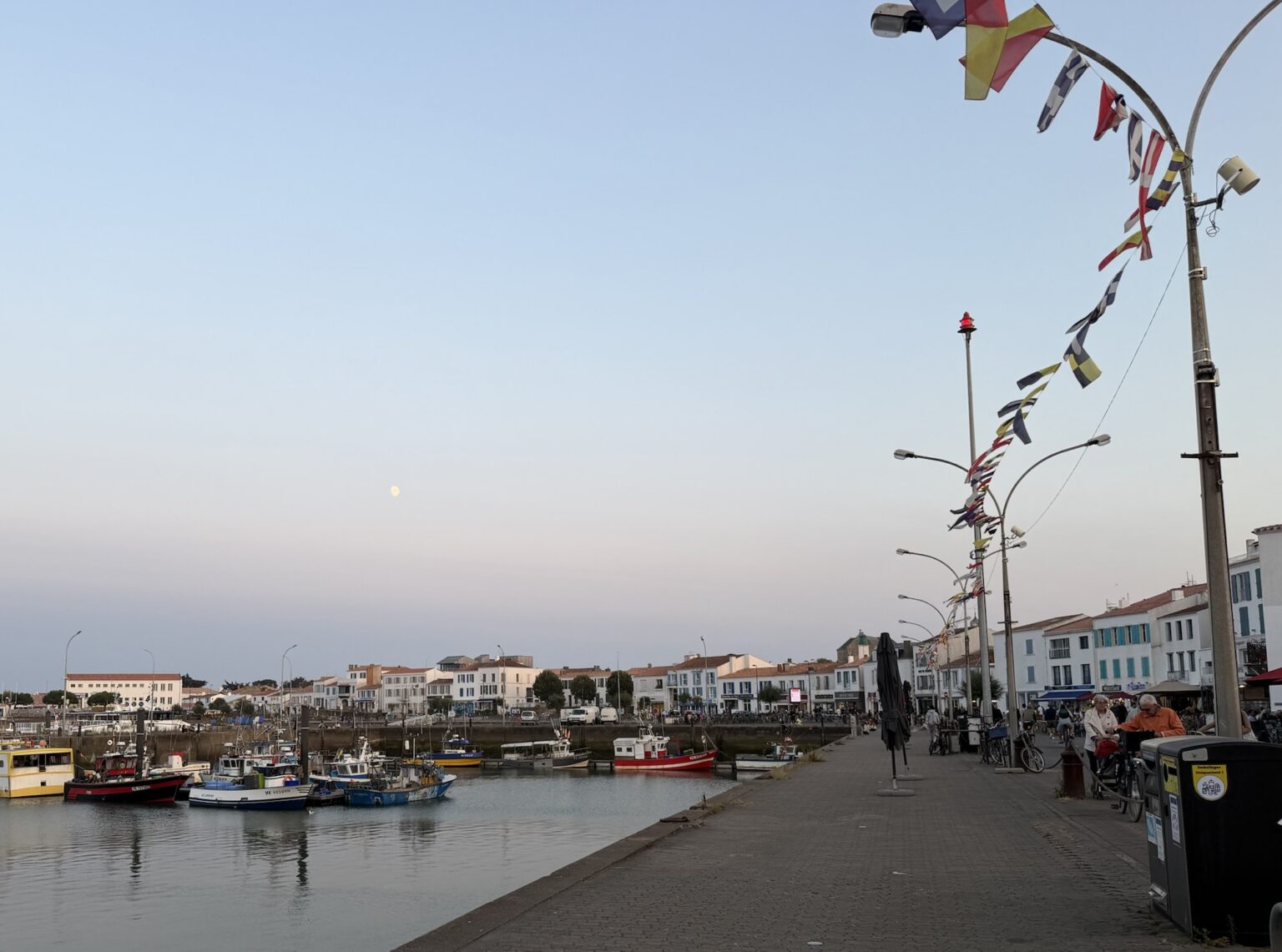
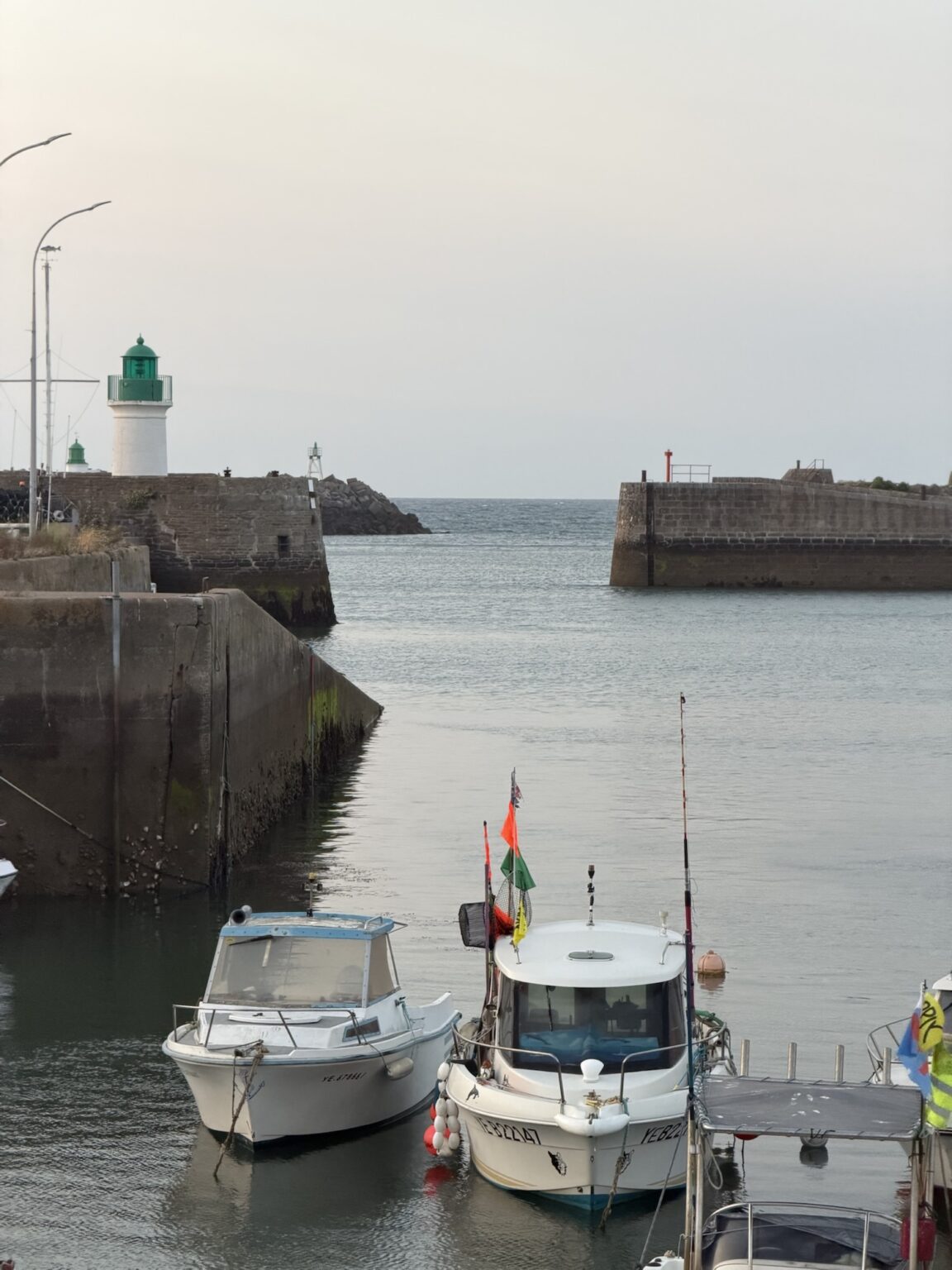
We arrived at Port Joinville, Ile d’Yeu in a strong breeze and David did very well to get her onto the dock as we were being blown off quite hard.
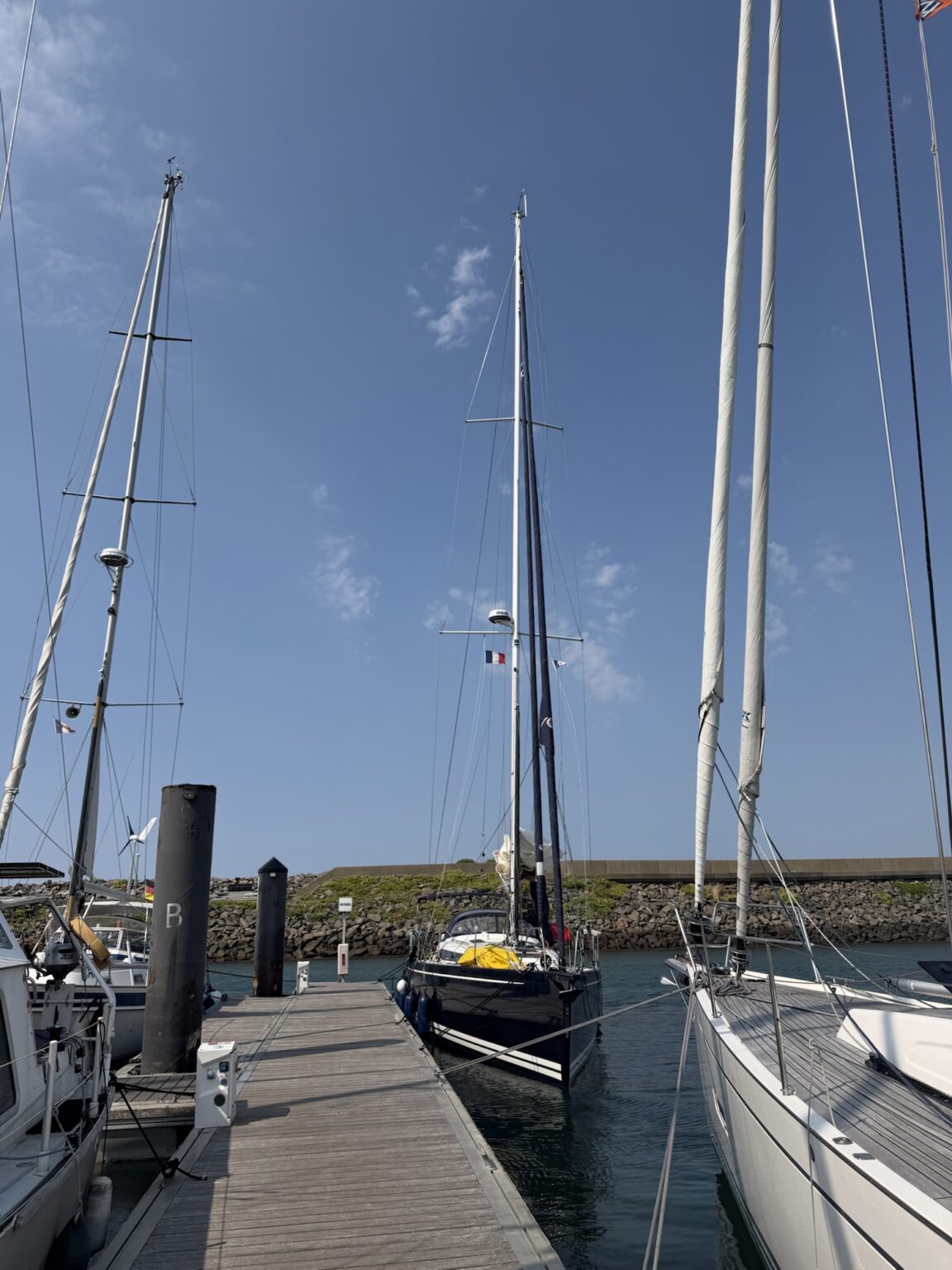
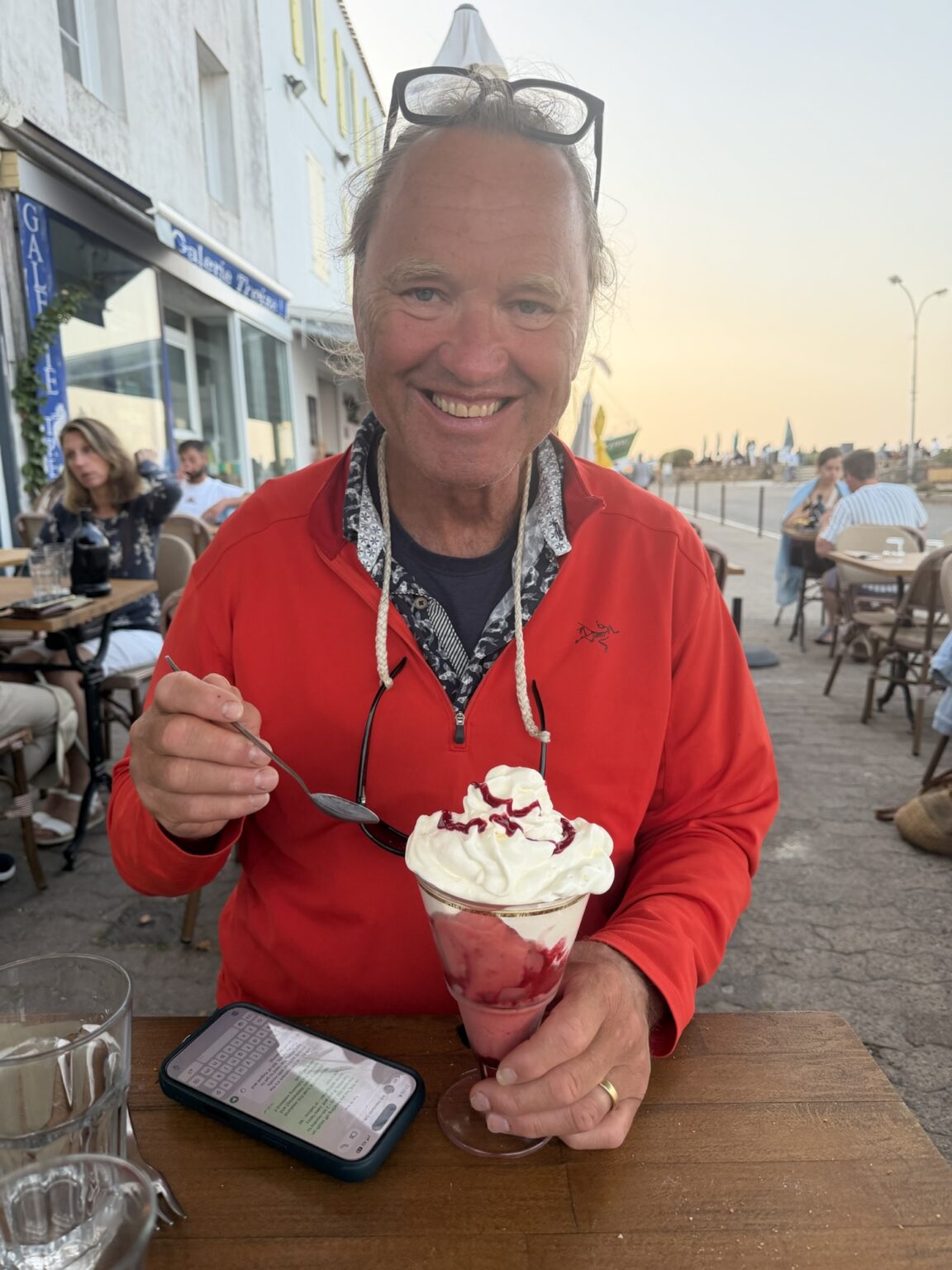
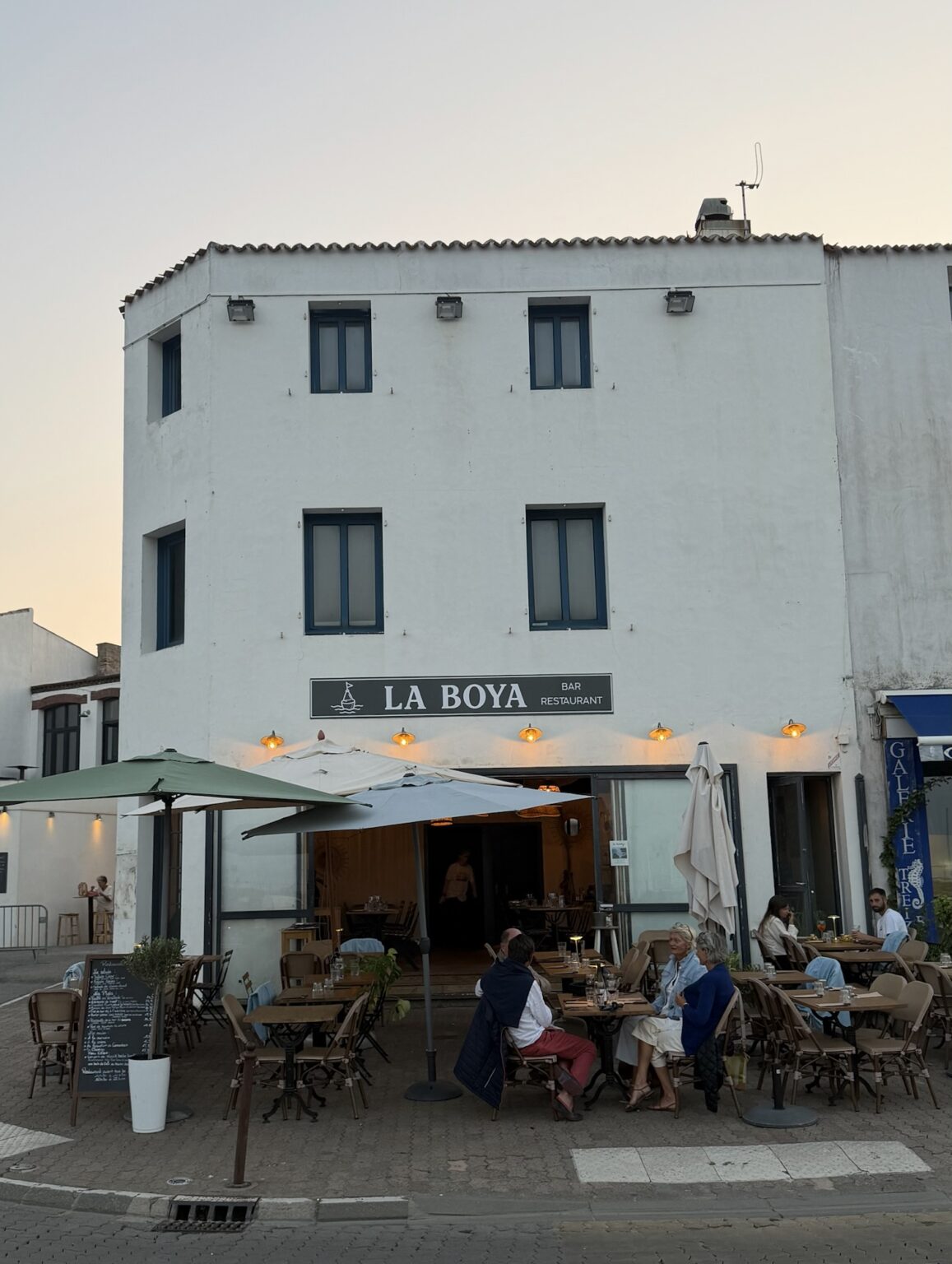
I got on with the washing as the men tidied the boat and we enjoyed an excellent meal. Chips taste particularly good after a windy day at sea!
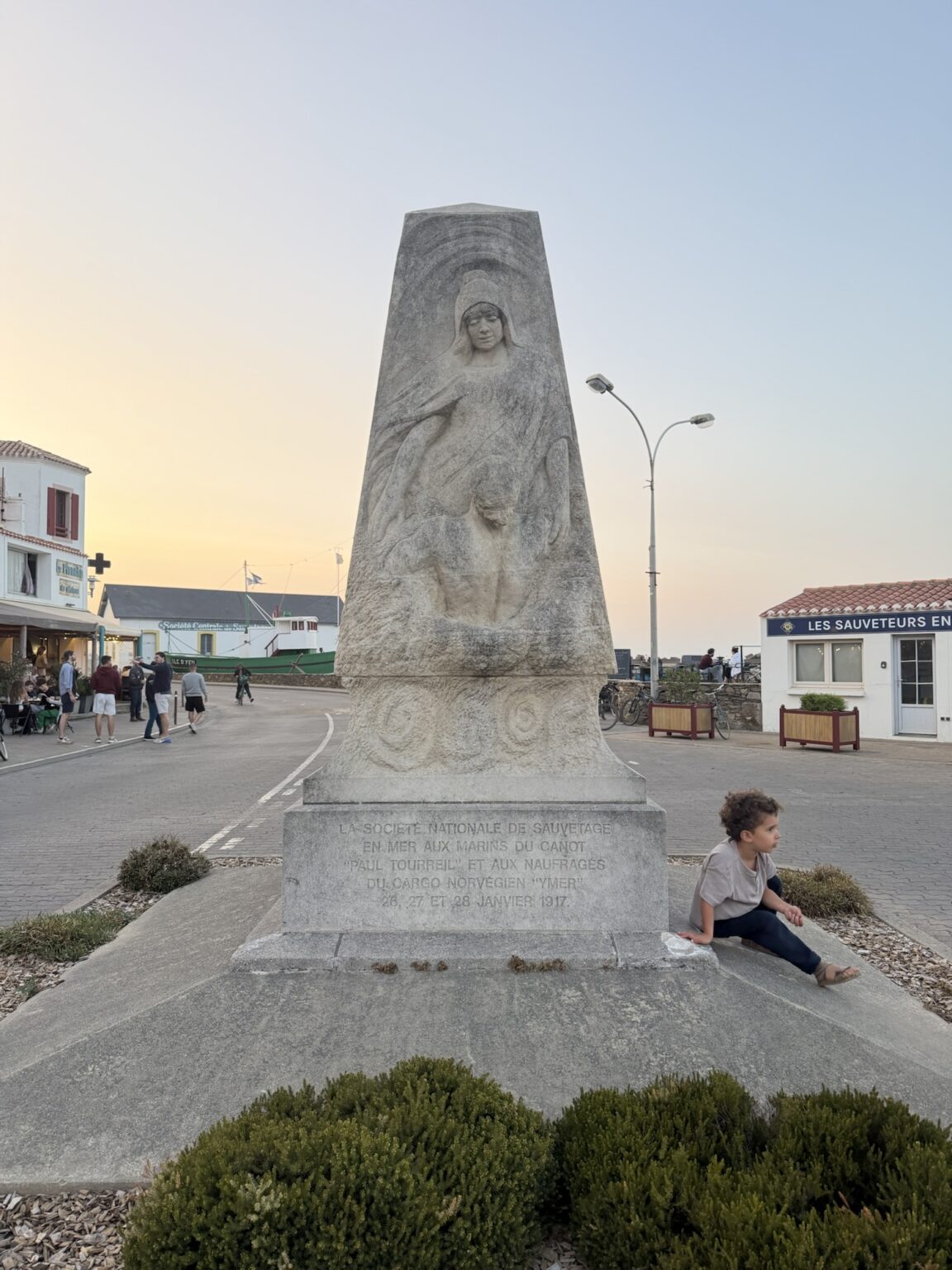
There is a moving monument to the crew of the Norwegian ‘Ymer’ and the lifeboat men of the ‘Paul Tourreil’ who attempted the rescue in January 1917. Having saved the crew, the lifeboat was blown back out to sea and spent 3 days in freezing conditions; 11 men were lost, only 6 survived.
Like Belle Ile, this island was also settled in prehistoric times and there are various menhirs to prove it. Then monks (from Ireland – Bangor) came who were pillaged by Vikings. In the Middle Ages, Jeanne de Belleville built a solid looking castle but despite this the English invaded and occupied the island for 37 years.
Napoleon III built the huge Fort de Pierre-Levée as a garrison and later it became a prison. In WWII the Germans used the island as part of their Atlantic wall defence and the prison as an internment camp.
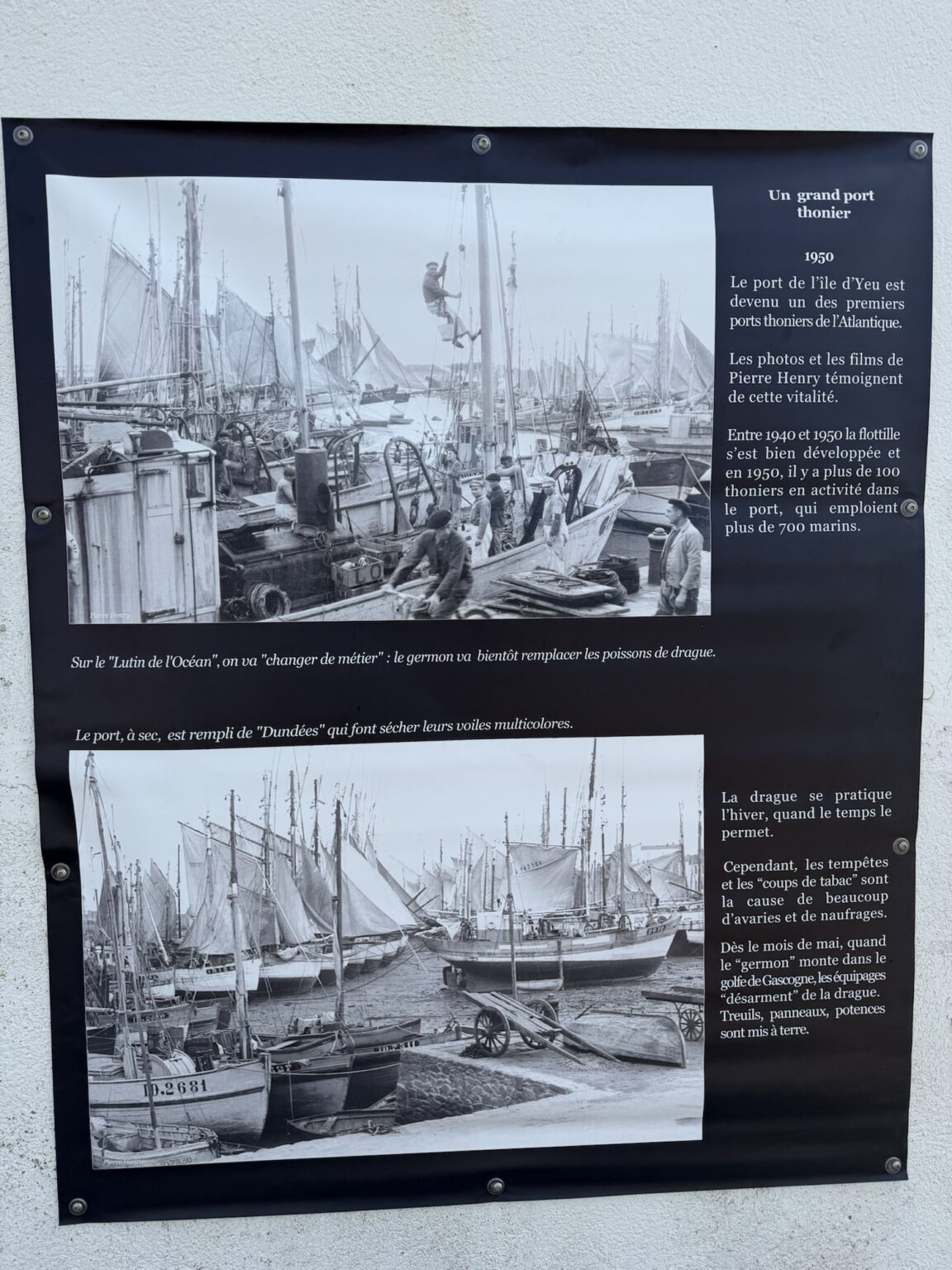
Thanks to the deep water harbour and the docks built for big boats, the island became an important hub for the tuna trade.
After WWII , Maréchal Petain of the Vichy regime was imprisoned here and released two weeks before his death in 1951. Sympathisers stole his body, wanting to give him a burial in France, but they were caught in a manhunt (or body hunt!) and so his grave remains on the Ile d’Yeu
The De Bles who became Dibbles in the UK left the Vendée in the1830 or 1848 rebellion One went to Osmotherly with a license to run the PO. A daughter married a Masterman who was the local doctor and she became your Nana’s great grandmother. The Vendeans were royalists in the revolution and many were forced into exile then, and in the later revolutions, no doubt to avoid that prison.
Lovely blogs. M.
What a fascinating island with such a rich and layered history. From prehistoric stones and medieval battles to Napoleon III’s impressive fortifications, it is amazing how many chapters of history are held in one small place. The stories of those who lived, fought, and endured there make your journey even more special. Thank you for sharing not just the sailing adventure, but also the history behind these beautiful places.